
Industrial PAT Testing
Stroud Electrical Services provides industrial PAT testing for factories, warehouses, manufacturing plants, workshops, food production and welding facilities across Gloucestershire. Our NICEIC-approved engineers test 110V site tools, 230V workshop tools, welding equipment and Class I plant, with per-item pricing, on-site labels and same-day digital reports.


Industrial Portable Appliance Testing Across Gloucestershire
NICEIC Approved
IET Code of Practice
Per-Item Pricing
Same-Day Reports
What Is Industrial PAT Testing?
Industrial PAT testing is the inspection and testing of portable and movable electrical equipment used on industrial premises. PAT stands for Portable Appliance Testing and applies to any equipment with a plug or flexible lead. In an industrial setting that includes 110V site tools, 230V workshop tools, welders, drills, grinders, power packs, extension leads, IEC leads, transformers and bench equipment.
Class I appliances (earthed)
110V site tools and centre-tapped transformers
Class III low-voltage equipment is usually visual only
IT and server rooms are tested carefully around live equipment
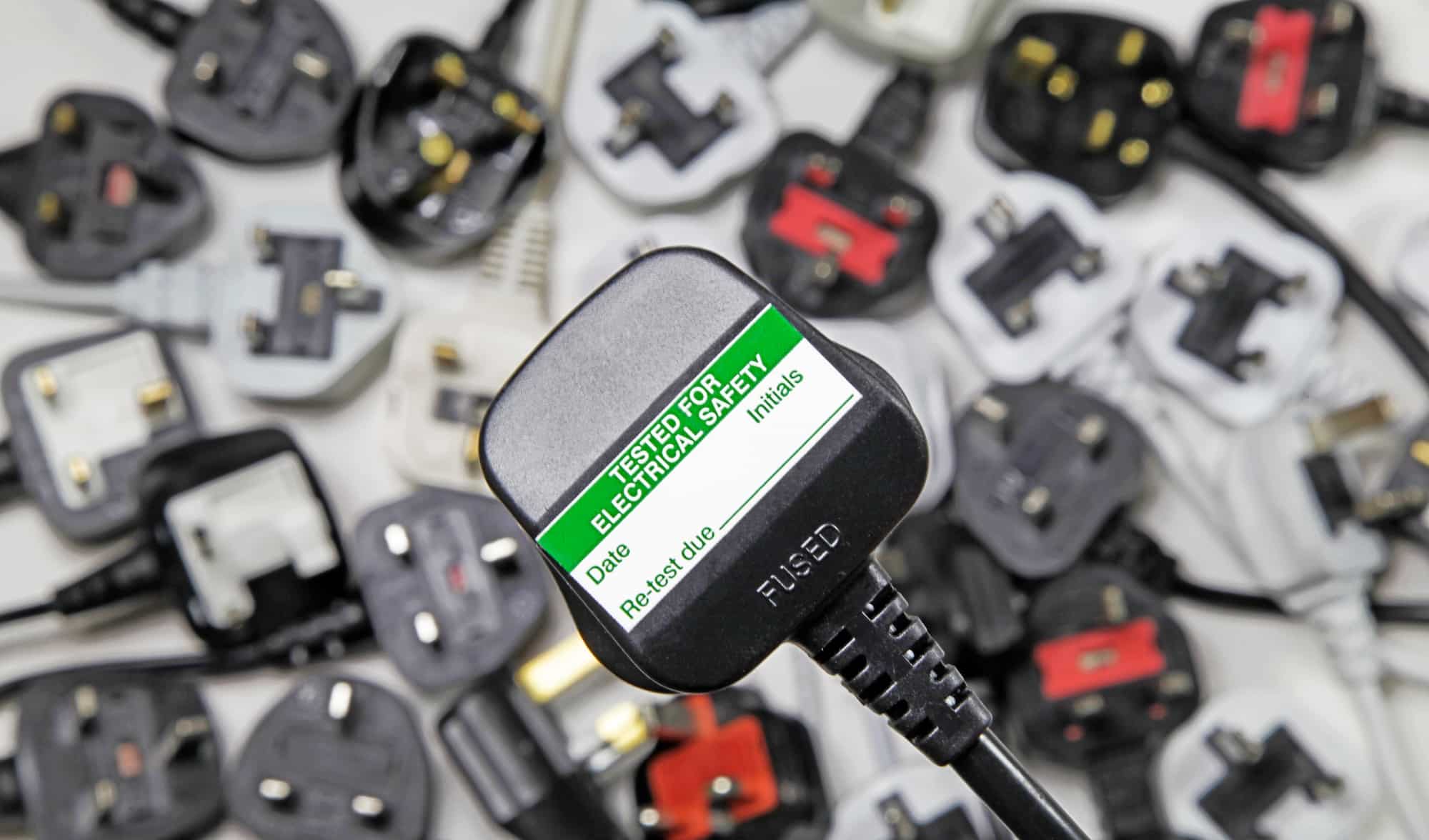
Each PAT inspection has two parts: a visual check (plug, cable, fuse rating, casing) and an electrical test using a calibrated PAT tester. Each appliance receives a pass or fail label with engineer ID, date and unique asset number, and is logged on a digital register. PAT covers portable items; EICR covers the fixed wiring.
In an industrial environment, PAT applies to anything with a plug, lead or socket connection — power tools, hand tools, welding sets, extension leads, IEC leads, fans, lighting, kitchen appliances and bench-top equipment.
Welding sets, transformers and 110V site tools can also be tested for compliance with IEC 60974-4 in addition to standard PAT. Mention any specialist equipment when you request a quote so the scope matches your kit.
Is PAT Testing a Legal Requirement?
PAT testing isn’t a specific legal duty by name, but employers and duty holders are legally required to keep electrical equipment safe. The Electricity at Work Regulations 1989 require electrical equipment to be maintained so it does not create danger, and PUWER 1998 requires work equipment to be kept in efficient working order.
We can help with:
An employer with staff using electrical equipment
A factory, warehouse or manufacturing operator
A construction principal contractor with site-supplied tools
A welding workshop, fabricator or hire company managing fleet stock
The HSE’s INDG236 guidance (‘Maintaining Portable Electric Equipment’) confirms that the law does not set a fixed PAT testing interval, and that low-risk office equipment doesn’t automatically need annual PAT testing. Instead, the HSE expects a risk-based approach, using user checks, visual inspections and electrical testing where needed. PAT testing is the recognised way to evidence that portable appliances have been checked and recorded for insurance and compliance purposes.
PAT testing is the recognised way to evidence that portable appliances have been checked and recorded for insurers, auditors and HSE inspectors.
Explore more of our
industrial||
industrial||
domesticproject capabilities
Who Needs PAT Testing and How Often?
Industrial environments usually need tighter PAT testing intervals than offices because tools and appliances are used harder, moved more often and exposed to tougher site conditions. The IET Code of Practice 5th edition gives industry-standard frequencies based on risk, equipment class and use. Typical industrial PAT settings:
We regularly help with:
Factories, manufacturing plants and processing facilities
Workshops, fabricators and welding shops
Construction sites, hire fleets and tool libraries
Industrial offices, plant rooms and ancillary spaces
The IET Code of Practice for In-Service Inspection and Testing of Electrical Equipment, 5th edition, gives industry-standard frequencies based on environment, use and previous test outcomes:
| Equipment Type and Environment | Visual Interval | Inspection + Test |
|---|---|---|
| IT equipment in offices | Annually | 2-4 years |
| Hotel and B&B equipment | Annually | 1-2 years |
| Commercial kitchen equipment | 6 months | 1 year |
| Schools (handheld and stationary) | 6 months | 1 year |
| Construction site 110V tools | 1 month | 3 months |
| Construction site 230V tools | Weekly | 1 month |
| Hire equipment | Before each issue | Yearly minimum |
| Landlord-supplied appliances | At change of tenancy | 1-2 years |
Source: IET Code of Practice for In-Service Inspection and Testing of Electrical Equipment, 5th edition.

What’s Included and What You’ll Receive
Our industrial PAT testing service gives you a clear appliance register, on-site labels and a digital record for your compliance files. Each appliance is methodically inspected and tested:
Visual inspection of plug, cable, fuse rating and casing
Electrical tests: earth continuity, insulation resistance, polarity
Pass or fail label with engineer ID, date and unique asset number
Digital PDF certificate and appliance register, usually same day
After the inspection you’ll receive a digital PDF certificate listing every appliance, asset number, pass/fail and next-test-due date, plus a pass or fail label on every tested appliance and a separate fixed-fee quote for any failed items requiring repair or replacement.
| Outcome | What It Means |
|---|---|
| Pass | Appliance is safe to use, labelled with next-test-due date and entered on the register. |
| Fail | Appliance is unsafe, labelled, withdrawn from use and quoted for repair or replacement. |
| Visual Only | Class III and some sealed Class II items receive a visual-only inspection where electrical testing is not appropriate. |
| No-Touch / Live | Server rooms, fixed IT and life-safety systems may be visual-only or require staged shutdown, agreed in advance. |
What our clients
say about our
services

10/10
Quality of Service
10/10
Communication
10/10
Reliability

Why Choose Stroud Electrical Services?
Stroud Electrical Services is an owner-run, NICEIC-approved electrical contractor based in Gloucestershire, supporting industrial clients since 2009. Our engineers use calibrated PAT testers from recognised manufacturers such as Seaward, Megger and Kewtech, with annual calibration certificates available on request.
We can combine industrial PAT testing with EICR inspections where suitable, reducing site visits and giving you a cleaner report bundle. Where failed equipment is found, we can quote separately for repair, replacement or rewiring. See our recent case studies for examples.


Industry Accredited