Industrial EICR Testing
Stroud Electrical Services provides industrial EICR testing for factories, warehouses, manufacturing plants, food production and processing facilities across Gloucestershire. Our NICEIC-approved engineers handle 3-phase distribution, motor control centres and busbar systems to BS 7671, with phased shutdowns and out-of-hours inspections to keep production moving.


Industrial EICR Testing Across Gloucestershire
NICEIC Approved
3-Phase Specialists
Phased Shutdowns
Out-of-Hours Available
What Is an Industrial EICR?
An industrial EICR is a formal inspection and test of the fixed electrical installation in an industrial premises. It covers fixed wiring, 3-phase distribution boards, sub-mains, busbar systems, motor control centres, protective devices, earthing and bonding, carried out to BS 7671:2018+A2:2022 (the IET Wiring Regulations).
It is different from PAT testing. PAT covers portable and movable equipment; an EICR covers the fixed installation.
3-phase distribution boards, busbar systems and sub-mains
Motor control centres, drives and contactor panels
Fixed wiring, containment and protective devices including RCDs, MCBs and MCCBs
Earthing and bonding, including TT, TN-S and TN-C-S systems
After the inspection you receive a Schedule of Inspections, a Schedule of Test Results and a final Electrical Installation Condition Report classifying findings against four codes (C1, C2, C3 and FI), with a clear Satisfactory or Unsatisfactory verdict.
For higher-risk industrial environments or hazardous areas with explosive atmospheres, additional regulations may apply such as DSEAR 2002 and BS EN 60079. Hazardous-area inspections require additional EX competency and we will partner with specialist inspectors where required.
We can scope phased shutdowns by board, distribution area or production line so critical operations keep running. Mention any 24/7 production constraints or shutdown windows when you request a quote so the scope matches your operating schedule.
Is an Industrial EICR a Legal Requirement?
For industrial premises, electrical systems must be maintained so they do not create danger. The Electricity at Work Regulations 1989 impose health and safety duties relating to electricity at work. An EICR is the recognised way to evidence that the fixed electrical installation has been inspected and tested by a competent person.
We can help with:
A factory or manufacturing operator
A warehouse or logistics business
A food production or processing site duty holder
A facilities manager for a multi-tenant industrial estate
The Regulatory Reform (Fire Safety) Order 2005 also requires responsible persons to assess and control fire risks in non-domestic premises. Most industrial insurance policies require a current EICR. For complex industrial sites, intervals shorter than the typical 3 years may apply where the environment, occupancy or process risk requires it.
Explore more of our
commercial||
industrial||
domesticproject capabilities
Who Needs One and How Often?
Industrial EICR testing is for any organisation responsible for an industrial electrical installation. We work with industrial operators across Stroud, Cheltenham, Gloucester, Cirencester, Stonehouse, Tetbury, Dursley, Nailsworth and Painswick. Typical premises include:
We regularly help with:
Factories, manufacturing plants and processing facilities
Workshops, fabricators and welding shops
Construction sites, hire fleets and depot facilities
Industrial estates, warehouses and food production sites
Most industrial premises need an EICR every 3 years. Higher-risk sites or harsh environments may need testing more often.
| Premises Type | Recommended Interval |
|---|---|
| Offices, retail and general commercial | Every 5 years or change of occupancy |
| Schools, hotels and hospitality | Every 5 years |
| Industrial premises | Every 3 years |
| Public buildings, leisure, theatres | Every 1-3 years |
| Caravan parks, petrol stations, higher-risk sites | Every 1 year |
| Construction site installations | Every 3 months |
Source: IET Guidance Note 3.
What’s Included and What You’ll Receive
Our electricians work through the installation methodically and record everything in a formal report. The inspection process covers:
Visual inspection of 3-phase boards, MCCs, switchgear and accessories
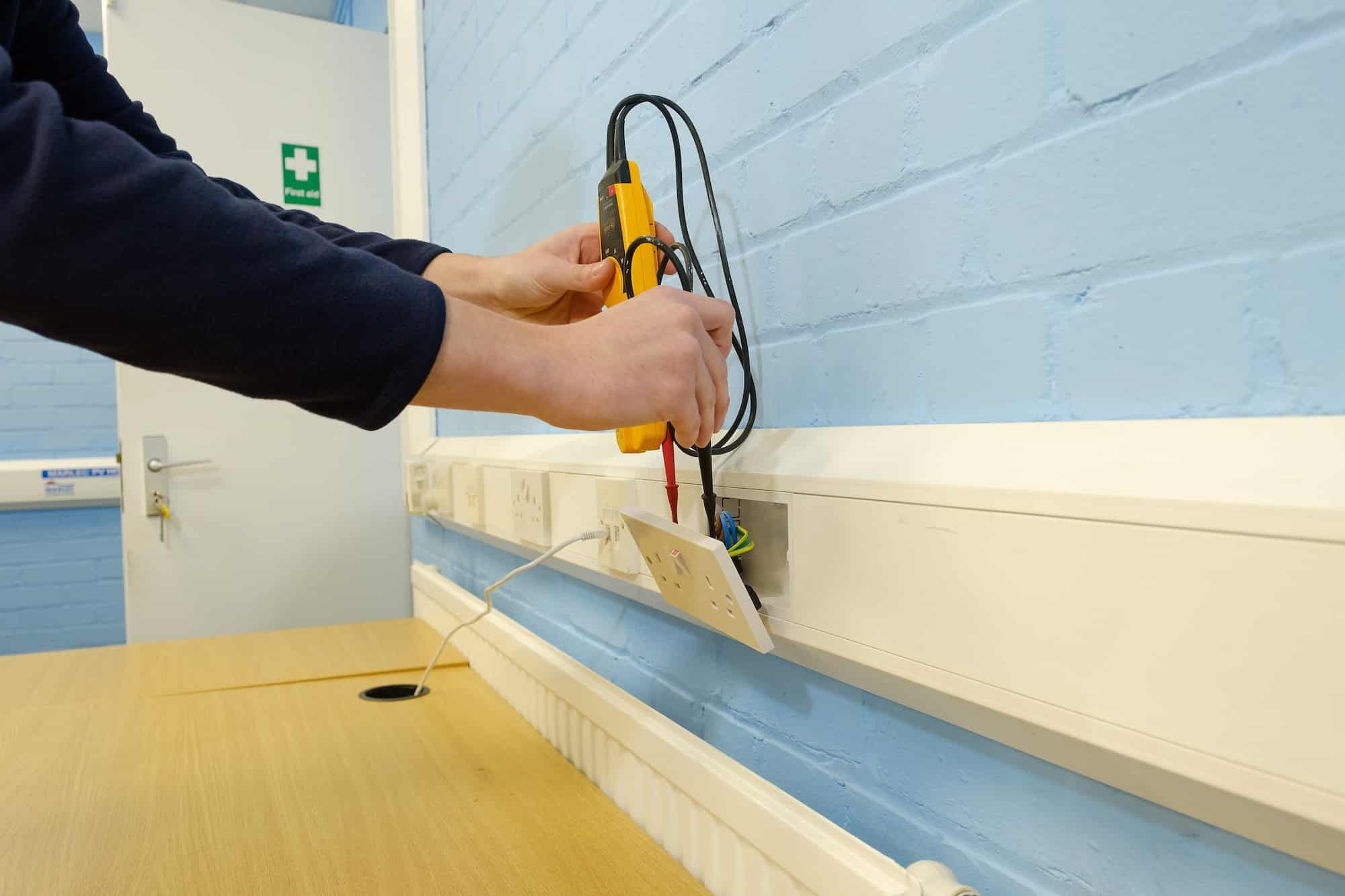
Dead testing: continuity, insulation resistance, polarity
Live testing: earth fault loop impedance, RCD operation, prospective fault current
Verification of earthing and bonding, plus formal report production
After the inspection you’ll receive: a Schedule of Inspections, a Schedule of Test Results, the final Electrical Installation Condition Report, and a fixed-fee quote for any remedial works (separate from the inspection cost).
Fixed-fee quotes within 24 hours. Final pricing depends on circuit count, premises type and any out-of-hours requirements.
What our clients
say about our
services

10/10
Quality of Service
10/10
Communication
10/10
Reliability

Why Choose Stroud Electrical Services?
Stroud Electrical Services is an owner-run, NICEIC-approved electrical contractor based in Gloucestershire. We support industrial electrical work across Gloucestershire since 2009. Our team of nine qualified electricians use industrial-grade test equipment such as Megger MFT testers, calibrated annually, with calibration certificates available on request.
We understand industrial EICR testing can interrupt production. Where possible, we plan inspections around your operating schedule, including phased shutdowns, early mornings, evenings or agreed out-of-hours access. Most reports are returned within the same week. If the EICR is unsatisfactory, we will talk through the findings and quote separately for remedial work, switchgear replacement or rewiring where required.
We plan testing around production requirements, including phased shutdowns and out-of-hours attendance where suitable. If your report is unsatisfactory, our in-house team can quote for remedial works, rewiring, lighting upgrades, switchgear replacement and retesting, giving you a single point of contact from inspection through to compliant certificate. See our recent case studies for examples.

Industry Accredited